Start with what you are protecting
People often say they want to “protect an idea,” but an idea can take several forms. A concept for a product is different from a working invention. A story premise is different from the words used to tell the story. A useful process kept inside a business is different from one described in a public manual. Those distinctions matter because patents, copyright and trade secrets protect different things.
None of these approaches grants ownership of every possible use of a broad concept. Instead, each has rules about what qualifies, what others may do and how protection can be lost or limited. Thinking first about the thing you have actually made—rather than the idea behind it—makes the choices easier to understand.
Patents: protection for qualifying inventions
Patents can protect certain inventions, such as products or processes, when they meet the requirements of the relevant patent system. Obtaining a patent generally involves applying to a government office and explaining the invention in enough detail for it to be assessed. Requirements and procedures vary by jurisdiction, but questions commonly include whether the invention is new and sufficiently different from what was already known.
A patent is an exchange: the inventor makes a technical description public and, if a patent is granted, receives a limited-period right to stop others from carrying out the protected invention within the places where the patent applies. A patent does not necessarily give its owner permission to make or sell a product; other rules or other people’s rights may still matter.
Public disclosure can affect the ability to obtain a patent, sometimes before an application is filed. That makes the timing of presentations, sales and publications worth considering. Patents may suit inventions whose workings can be identified or copied once a product is available, but the application process takes effort and the resulting protection is defined by the patent’s claims.
Copyright: protection for creative expression
Copyright generally protects original expression fixed in a form, such as written text, illustrations, music, photographs or software code. It does not usually protect the underlying idea, fact, method or general theme. Two writers can independently create different stories about the same premise; copyright concerns the particular expression each writer produces.
Unlike a patent, copyright protection often arises without an application, although registration or other formal steps may offer advantages in some places. It typically gives the creator rights over uses such as copying and distributing the work, subject to exceptions and limitations that differ by jurisdiction. It also does not prevent someone from independently making a similar work without copying.
Consider a guide to a new way of organizing a kitchen. Copyright may protect the guide’s wording, diagrams and photographs. It does not, by itself, reserve the organizing method described in those pages. Publishing the guide may also reveal practical details that cannot later be treated as confidential.
Trade secrets: protection through confidentiality
A trade secret is valuable information that remains secret and is subject to reasonable efforts to keep it that way. Depending on the circumstances, it might be a manufacturing process, a formula or internal know-how. Unlike a patent, trade secret protection does not require publishing the information, and it can potentially continue while the information remains secret and meets the applicable requirements.
Secrecy is both the strength and the limit of this approach. Restricting access, explaining confidentiality duties and handling sensitive files carefully can help preserve it. But trade secret protection generally does not stop someone from independently developing the same information or discovering it through lawful means, such as permissible reverse engineering. Once information becomes widely known, calling it confidential will not make it secret again.
This approach may be difficult for features that customers can readily inspect in a finished product. It can be more practical for information that stays behind the scenes, provided the people who need access can still do their work.
How to compare the approaches
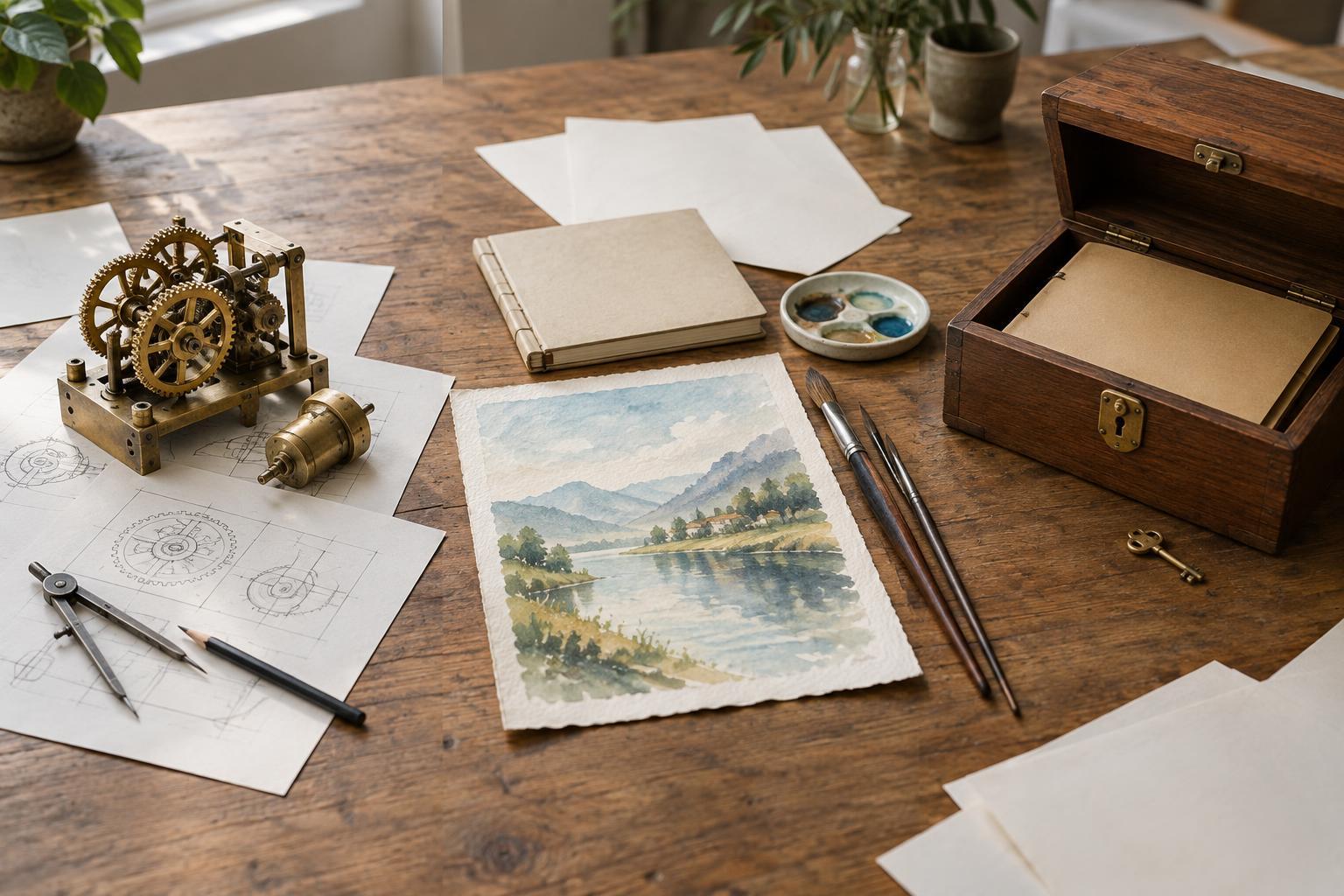
A useful first question is whether the value lies in a technical invention, a particular creative work or information that can realistically be kept confidential. The same project may contain all three: a device might use a potentially patentable mechanism, have copyrighted instructions and rely on a confidential production technique. Protection for one element does not automatically extend to the others.
Next, consider what sharing the work would reveal. Patent applications involve disclosure; copyright protects expression even when a work is published; trade secrets depend on maintaining secrecy. Also consider what a competitor could learn independently from the finished product and what you would need to identify if copying occurred. These questions will not settle every legal issue, but they can clarify the practical trade-offs.
Rules differ across jurisdictions and particular facts matter, so this overview is not a substitute for legal advice on a specific project. The durable lesson is simpler: instead of asking how to protect an idea in the abstract, identify its concrete parts and examine the form of protection suited to each one.