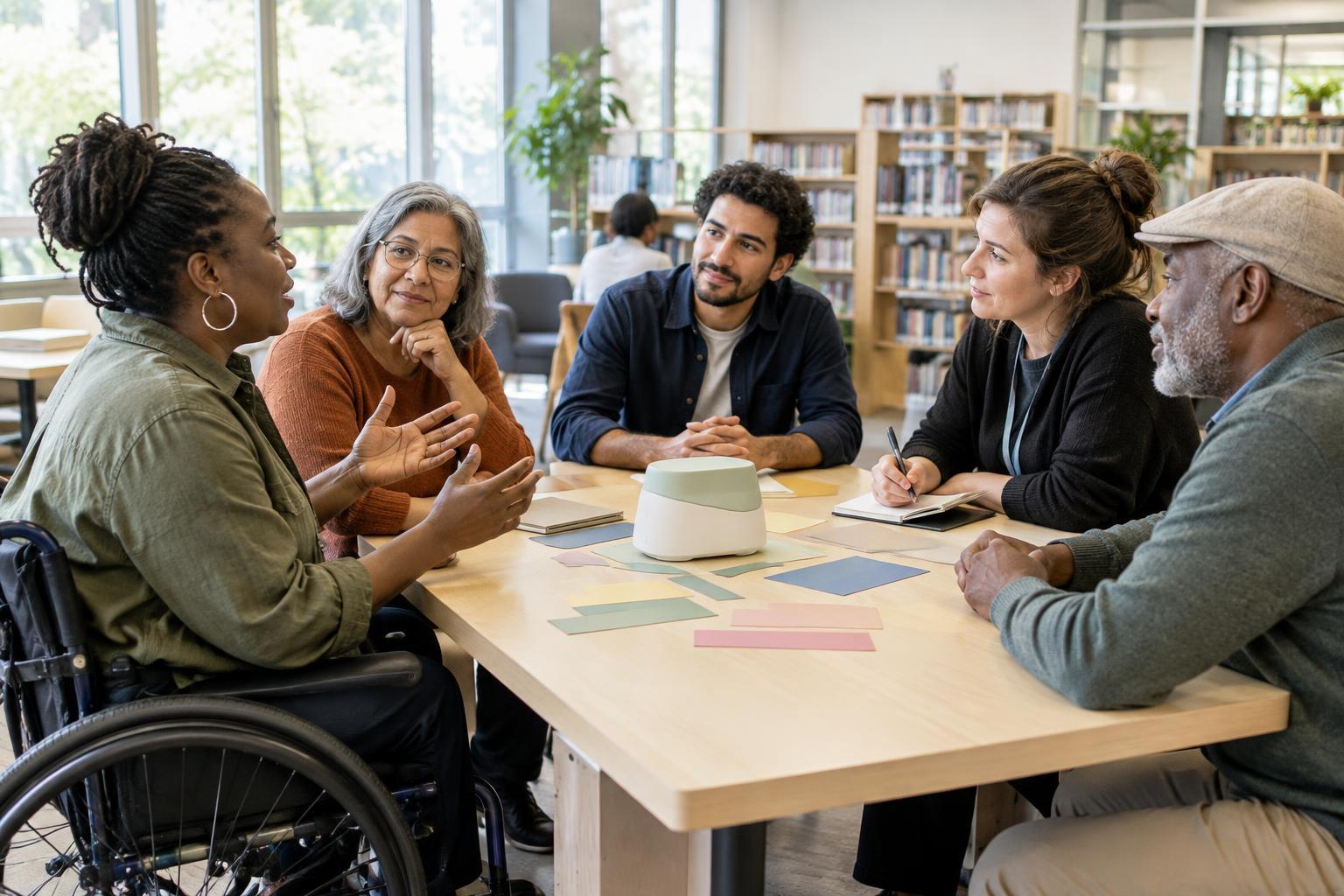
Start with who may be affected
Innovation is often described from the creator’s point of view: a problem has been identified, and a new approach promises to solve it. But the people affected by that approach may define the problem differently. A scheduling tool might save an organization time while making it harder for customers to reach a person. Asking for input before the solution is fixed gives a team room to discover such trade-offs.
Begin by mapping everyone who may use, depend on, administer or be excluded by the proposed change. Think beyond the most visible users. Who must adapt their work? Who bears the cost if the idea fails? Who has limited access to the technology, time or support it requires? This map is a starting hypothesis, not a complete list. Revise it as people point out groups or effects the team overlooked.
Make the purpose of participation clear
An invitation to participate should say what stage the project has reached and what remains open to change. People can offer more useful input when they know whether they are helping define a problem, comparing possible designs or testing an early version. Be equally clear about constraints, such as requirements the team cannot alter. Do not describe a consultation as shared decision-making if the organization retains the final say.
Choose methods that fit the question. Conversations can uncover experiences and concerns in depth; observation can show where a process becomes confusing; prototype testing can reveal obstacles in a specific design. A short survey may help gather input from more people, but its preset questions can miss issues the team has not imagined. Using more than one method can make it easier to hear both detailed experiences and broader patterns.
Remove barriers to taking part
People cannot shape an innovation if participation is impractical for them. Offer suitable times and formats, explain activities in plain language and make it possible to contribute without specialized knowledge. Depending on the project, that may mean providing interpretation, accessible materials, remote and in-person options, or a way to respond privately. Consider whether compensation for people’s time and expenses is appropriate, especially when a project repeatedly asks the same people to contribute.
Pay attention to who feels safe speaking. Someone who relies on an organization’s service may hesitate to criticize it in front of staff. A worker may worry that honest comments will reach a supervisor. Explain who will see the input, how it will be used and any limits to confidentiality. Avoid collecting personal details that are not needed. Where power differences could silence participants, separate conversations or an independent facilitator may help.
Give input a route into decisions
Listening is only one part of involvement. Before gathering input, decide how the team will record concerns, review conflicting views and connect findings to design choices. Otherwise, participation risks becoming a collection of comments that nobody is responsible for acting on. Assign someone to track important questions and revisit them at decision points, not just at the end of the project.
Affected people will not always agree, and no single participant can speak for an entire group. Look for differences as well as common themes: a feature that helps frequent users may create a barrier for occasional ones. When views conflict, explain the trade-off rather than treating a majority preference as the only consideration. Teams may also need to pause or change course when input reveals a serious risk that the original plan did not address.
Close the loop and keep learning
Tell participants what happened after they contributed. A useful update distinguishes what changed, what did not and why. It can also acknowledge questions that remain unresolved. This does not promise that every suggestion will be adopted; it shows that people’s time was taken seriously and gives them a chance to flag misunderstandings before a decision is final.
Involvement should continue when an idea moves into use. Conditions can change, and effects that were hard to predict may become visible in practice. Provide a straightforward way to report problems, decide who will respond and check whether changes actually help. Responsible innovation is less a single consultation than a habit of making decisions with the people who must live with their consequences.