Why package prices are hard to compare
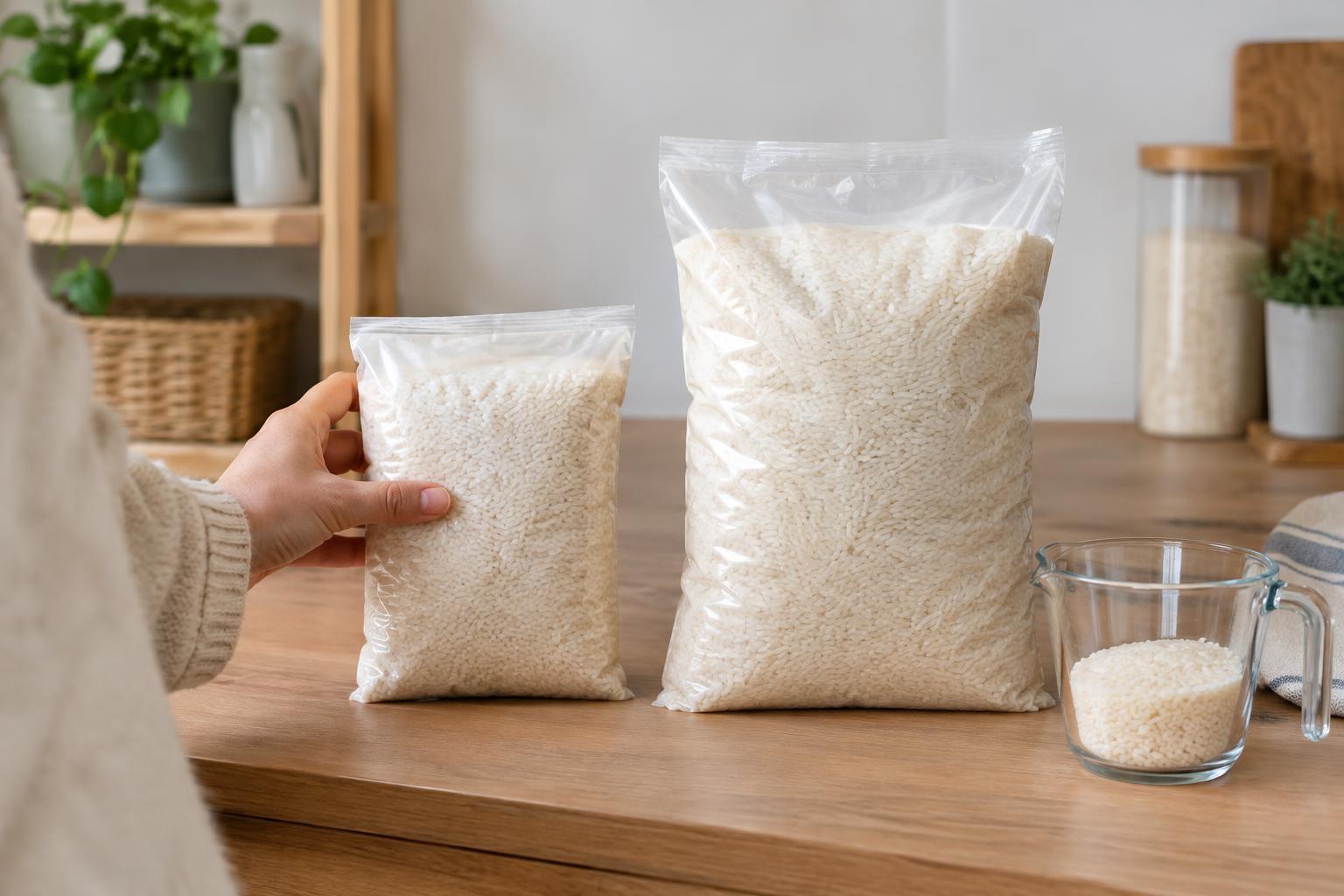
Two packages of the same product can have very different prices without making it obvious which offers more for your money. A small jar might cost less at the register, while a larger jar might cost less for each ounce inside it. Unit pricing puts both packages on the same scale so you can compare the amount you receive for the price you pay.
The basic calculation is price divided by quantity. If a 12-ounce package costs $3.60, its unit price is $0.30 per ounce. If a 20-ounce package costs $5.00, its unit price is $0.25 per ounce. The larger package costs more overall but less per ounce. That distinction matters when you are choosing between a lower immediate expense and a lower price for the product itself.
Start with a common unit
Many shelf labels display a unit price, often alongside the package price. Before comparing two labels, check that they use the same unit. A price per ounce cannot be compared directly with a price per pound; a price per item may not be useful beside a price per ounce. If the units differ, convert one quantity or calculate both prices using a unit you find easy to understand.
For example, a 450-gram package priced at $4.50 costs $1.00 per 100 grams. A 750-gram package priced at $6.00 costs $0.80 per 100 grams. To calculate that, divide each package price by the number of 100-gram portions it contains. You can use the same method for ounces, liters, sheets, or any other unit that describes what you are buying.
Use the quantity printed on the package rather than judging by its apparent size. Packaging can make one product look bigger even when it contains less. Also check whether the stated quantity refers to weight, volume, or count. Those measures describe different things, and comparing them requires enough product information to make the conversion meaningful.
Compare the product you can actually use
A simple unit-price calculation may miss important differences between packages. For food packed in liquid, the total weight can include water, brine, or syrup. If your recipe uses only the solid contents, a listed drained weight may be a more useful basis for comparison. Similarly, a concentrated product may make more servings than its small container suggests. Follow the package directions to estimate how much usable product it makes rather than comparing container volumes alone.
Count-based packages deserve a closer look too. A box of 100 wipes is not necessarily equivalent to another box of 100 if the wipes differ substantially in size or intended use. For paper products, a price per roll can conceal differences in the number of sheets. Unit price works best when the items being compared do roughly the same job and the chosen unit reflects how you use them.
Check the price you will really pay
Promotions can change the comparison. A temporary discount, coupon, or multi-buy offer may lower the effective unit price, but only if you meet its conditions. Read the sign carefully: a discount might require a membership, a particular number of packages, or a specific product size. Calculate using the amount you would actually spend and the quantity you would actually take home.
A multi-buy deal is worth evaluating as a single purchase. If two packages together cost $8 and contain 40 ounces in total, the deal is $0.20 per ounce. Compare that with the unit price of one package at its regular price and with any other size on the shelf. Buying extra solely to meet an offer does not help if you cannot use the extra product.
Let your needs break a close tie
The lowest unit price is not always the best choice for your household. A large package may go stale, expire, or take up storage space before you finish it. A smaller one may be easier to carry, measure, or try for the first time. If you use only part of a bargain-sized product and discard the rest, the price per usable unit becomes higher than the shelf calculation suggests.
Treat unit price as a tool, not a verdict. First compare products using the same meaningful unit. Then consider quality, how much you expect to use, and the total amount you need to spend today. That short routine helps you see what a size difference really costs without assuming that bigger—or cheaper at the register—must be better.