Start with a question the interview can answer
Research interviews are useful for understanding how people describe experiences, make choices, and interpret situations. They are less suited to measuring how common an opinion is across a population. Before drafting a question guide, write down what you hope to learn. “How do people choose a way to track household tasks?” gives an interview a clearer direction than “Do people like task apps?” It invites participants to discuss routines, constraints, and alternatives rather than simply approve or reject a product.
Decide whom you need to hear from and why. If your topic concerns first-time users, conversations only with experienced users may leave an important gap. Prepare a short introduction explaining the purpose of the conversation, how notes or recordings will be used, and whether a participant may skip a question or stop. This gives people a clearer basis for deciding what to share. A question guide can keep interviews comparable, but leave room to follow an unexpected detail that bears on your research question.
Write prompts that leave the answer open
A neutral prompt does not imply which response would be helpful or correct. Compare “How frustrating was the sign-up process?” with “Can you walk me through signing up?” The first assumes frustration; the second allows the participant to describe a smooth experience, a difficult one, or something in between. Likewise, “Why did you ignore the instructions?” assumes a deliberate choice. “What did you notice about the instructions?” makes fewer assumptions.
Begin with concrete experiences when possible. “Tell me about the last time you chose a service like this” is often easier to answer than “What do you usually value in a service?” A participant can describe what happened, what information they had, and what they did next. You can then ask about their reasoning. Avoid packing several questions into one prompt, such as asking about price, trust, and convenience at once. Ask about each topic separately so the participant has space to answer.
Follow the participant’s meaning, not your preferred story
Good follow-up questions help a participant add detail without supplying an explanation for them. “What happened next?”, “Can you give me an example?”, and “What did you mean by ‘easier’?” can clarify an answer while leaving its meaning with the speaker. If someone says they stopped using a tool, ask what led up to that point rather than whether a particular feature caused the decision. The feature may matter, but introducing it too early can shape the account you hear.
Pause after an answer instead of immediately filling the silence. A little time may help someone recall a detail or decide how to express a thought. When you need to check your understanding, offer a tentative summary: “I heard that finding the information took time, but deciding what to do with it was straightforward. Is that right?” A correction is valuable. It shows where your interpretation differed from theirs. Keep follow-ups curious rather than argumentative, even when an answer surprises you.
Keep the conversation consistent without making it rigid
Use the same core topics across interviews so you can look for similarities and differences later. The exact wording and order can change when a participant’s account calls for it, but note meaningful changes to your guide. If you introduce a new prompt halfway through a series of interviews, earlier participants did not have the same opportunity to answer it. That does not make the new answers useless; it affects how confidently you can compare them.
Take notes that distinguish what a participant said from what you inferred. A note such as “participant returned to the comparison page three times” is different from “participant was confused.” If recording is appropriate, ask permission first and explain who will have access to it. After each conversation, jot down points you want to clarify in later interviews, including questions that may have unintentionally suggested an answer. Revising a prompt is part of improving the process.
Interpret patterns with appropriate limits
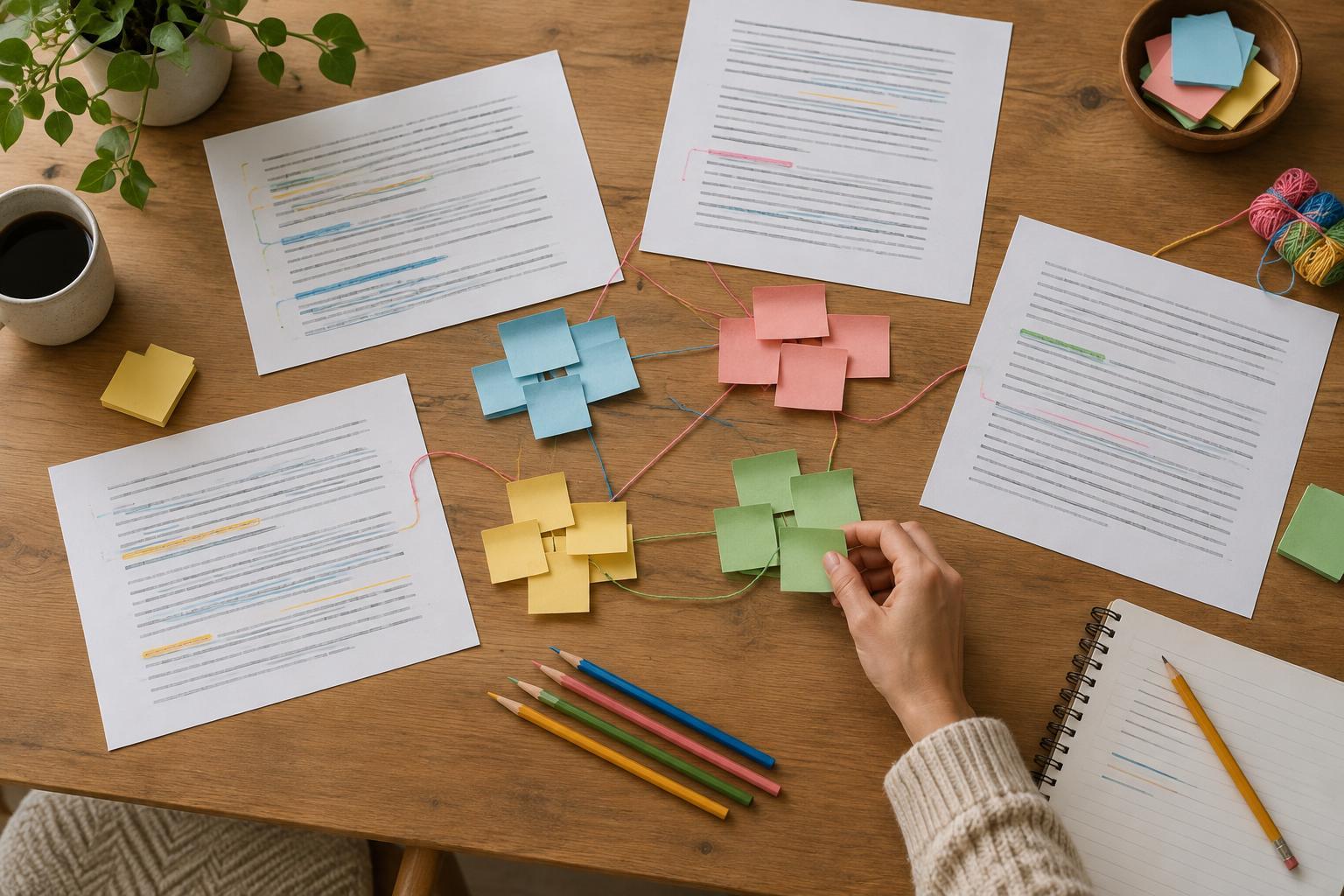
After the interviews, review accounts across participants rather than relying on the most memorable conversation. Group related observations, then look for differences and exceptions. Did people use the same word to mean different things? Did a choice that sounded unusual make sense once you understood the person’s circumstances? Preserve those distinctions instead of forcing every account into a tidy theme. It can help to keep the original wording alongside your summaries.
Interview findings can suggest needs, explanations, and questions worth investigating further. They do not, on their own, establish how many people share a view or prove why someone behaved as they did. When presenting findings, describe who you spoke with in general terms, what you asked, and where your interpretation is uncertain. The goal is not to produce a perfect-sounding story. It is to offer a careful account of what these conversations reveal—and what remains to be learned.